




Erasing Acne Scars: How Vybe RF Microneedling Achieves a Smoother, Flawless Skin Texture
March 31, 2026


Precision skin renewal for those who want real change beneath the surface
Acne scars carry a weight that extends far beyond what anyone else can see.
Long after the breakouts have resolved and the inflammation has calmed, the texture remains. It sits in the skin like a quiet reminder of something your body once fought through. And for many people, it feels permanent.
That perception is understandable.
Acne scarring involves structural changes beneath the surface. Collagen has been disrupted. Tissue has healed unevenly. The skin’s architecture has shifted in ways that topical products simply cannot reverse.
No serum will rebuild what was lost at the dermal level.
No peel will restructure damaged collagen.
The emotional toll is real too. Acne scarring affects self-esteem, social confidence, and quality of life long after the active condition has cleared. It is not vanity driving people to seek treatment. It is a desire to feel comfortable in their own skin again.
But the skin is more adaptable than most people realize. With the right approach, the right technology, and a provider who understands how to guide remodeling, acne scars can be meaningfully improved. At The Skin Society in Fayetteville GA, that approach begins with Vybe RF Microneedling.
A treatment designed not to mask imperfections, but to rebuild the foundation your skin lost.
What actually happens beneath the skin when acne scars form
Acne scarring is a wound healing response that went sideways.
When inflammatory acne penetrates deep enough to damage the dermis, the body responds with collagen production. But that production is rarely organized or proportional.
In most cases, the body produces too little collagen in localized areas. The result is depressions where the skin’s surface dips below the surrounding tissue. In other cases, the body overproduces collagen, leaving raised areas that feel firm and uneven.
The type of scar that develops depends on the severity of the original inflammation, the depth of tissue involvement, and the individual’s healing biology.
What makes acne scarring so difficult to address with surface-level care is that the damage lives in the dermis. Sometimes deeper.
Topical exfoliants can smooth texture at the epidermal level. They cannot restructure collagen beneath it. That structural rebuild is exactly what RF Microneedling is designed to do.
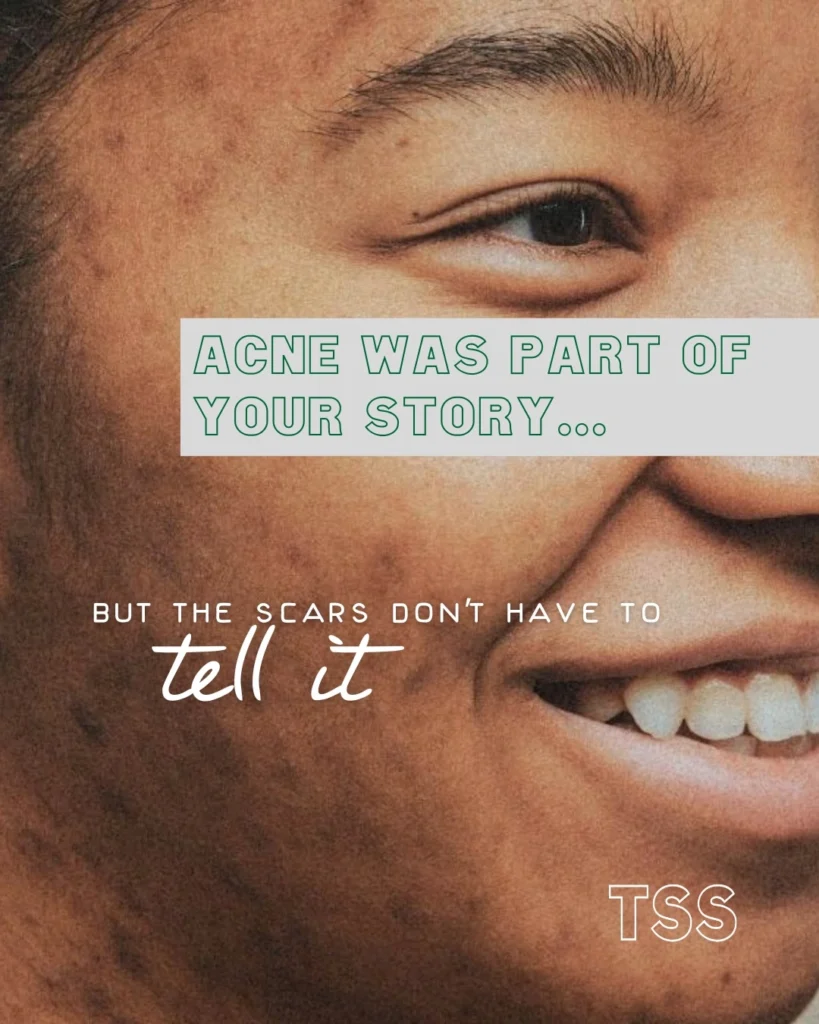
The different types of acne scars and why classification matters before treatment
Not all acne scars respond to the same approach. Understanding the type of scarring present is essential for selecting the right treatment depth, energy level, and overall strategy.
| Scar Type | What It Looks Like | How RF Microneedling Helps |
| Icepick | Deep, narrow, V-shaped indentations that extend into the dermis. Often less than 2mm wide but penetrate significantly. | RF energy reaches deeper tissue layers where traditional microneedling alone cannot. Controlled thermal injury stimulates collagen at the base of the scar. |
| Boxcar | Wider, round or oval depressions with defined vertical edges. Can be shallow or deep depending on severity. | The combination of mechanical and thermal remodeling smooths the sharp edges and encourages volume restoration within the depressed area. |
| Rolling | Broad, undulating depressions with sloping edges that give the skin a wavelike appearance. Caused by fibrous bands beneath the surface. | RF heat disrupts the fibrous tethers pulling the skin downward while promoting new, organized collagen that lifts and supports the surface. |
| Hypertrophic | Raised, firm tissue that sits above the skin’s surface. Results from excess collagen production during healing. | RF Microneedling helps regulate and remodel overproduced collagen, gradually softening and flattening the raised tissue. |
Most people carry a combination of scar types. That is precisely why a thorough skin assessment matters before any treatment plan is built.
What you see on the surface tells only part of the story.
How Vybe RF Microneedling rebuilds what acne scarring took away
Vybe RF Microneedling works through a dual mechanism that targets both the surface and the deep structural layers of the skin simultaneously.
Fine, sterile microneedles create controlled microchannels in the skin. These channels bypass the outer barrier and reach the dermal layer where scar tissue resides. As the needles penetrate, radiofrequency energy is delivered directly into the tissue at a precise, adjustable depth.
This RF energy generates controlled thermal zones within the dermis. The heat triggers a cascade of biological responses. Fibroblast activation. Growth factor release. The gradual production of new, organized collagen and elastin.
Unlike traditional microneedling alone, which relies on surface-level wound healing, the addition of radiofrequency energy extends the remodeling process into deeper tissue where the structural disruption from acne scarring actually lives.
Over weeks and months, the new collagen fills and softens depressed areas, reorganizes fibrous bands, and restores a more uniform surface.
What distinguishes this from traditional microneedling alone is the depth and durability of the response. Standard microneedling stimulates collagen primarily in the upper dermis. The addition of radiofrequency extends that response significantly deeper, reaching the reticular dermis where the most impactful structural changes occur. For acne scars that live in those deeper layers, this difference is fundamental.
| Why depth control changes everything for acne scar treatment Acne scars vary in depth, sometimes within the same square inch of skin. A treatment that delivers one uniform depth will inevitably undertreat some scars and overtreat others. Vybe allows for precise depth and energy adjustment throughout a single session. Icepick scars, rolling scars, and boxcar scars can each receive the exact level of intervention they require. That level of customization is what separates a good outcome from a transformative one. |
What makes Vybe the preferred choice for acne scar revision at The Skin Society
Not all RF Microneedling devices are created with the same level of precision.
Vybe was selected for The Skin Society’s treatment suite because it offers the kind of granular control that acne scar treatment demands.
- Adjustable needle depth and energy output allow the provider to tailor the treatment to each scar type, skin thickness, and facial zone within a single session. Facial skin, neck skin, and the delicate tissue around the jawline all respond differently. Vybe accounts for that.
- Consistent, controlled energy delivery ensures that the thermal zones created in the dermis are uniform and predictable. Inconsistent energy leads to uneven healing, unnecessary irritation, or results that plateau before they should.
Clinical research supports fractional RF microneedling as a highly effective monotherapy for acne scarring. A 2025 systematic review found that across 16 clinical studies, all patients showed significant improvement in scar appearance. Validated acne scar grading systems consistently documented reductions in both scar depth and number after a series of treatments.
Adverse effects were mild and transient. The most common was temporary redness that resolved within days.
These findings reinforce what we observe in practice. When the technology is precise and the approach is strategic, the skin responds with meaningful, lasting change.
Why the provider and the plan matter as much as the technology itself
Technology is only as effective as the strategy guiding it.
At The Skin Society, RF Microneedling is never performed as an isolated event. It is part of a larger skin health plan that accounts for your skin’s current condition, its healing capacity, its inflammation tendencies, and your long-term goals.
This is especially important with acne scarring. The skin has already been through significant stress. Jumping into aggressive stimulation without assessing barrier health, active inflammation, or underlying sensitivities can compromise results and slow healing.
We see it happen all the time. A client arrives having already undergone multiple treatments elsewhere with disappointing results. Not because the technology failed. Because no one took the time to understand the skin before using it.
That is why every acne scar treatment plan at The Skin Society begins with understanding. We evaluate what your skin needs now. What it can tolerate. Where the greatest opportunity for improvement lives.
Sometimes that means starting with barrier stabilization before introducing RF Microneedling. Other times, the skin is ready to begin immediately.
The distinction matters. It is the kind of nuance that protects your investment in the process.
What the treatment experience feels like from preparation to recovery
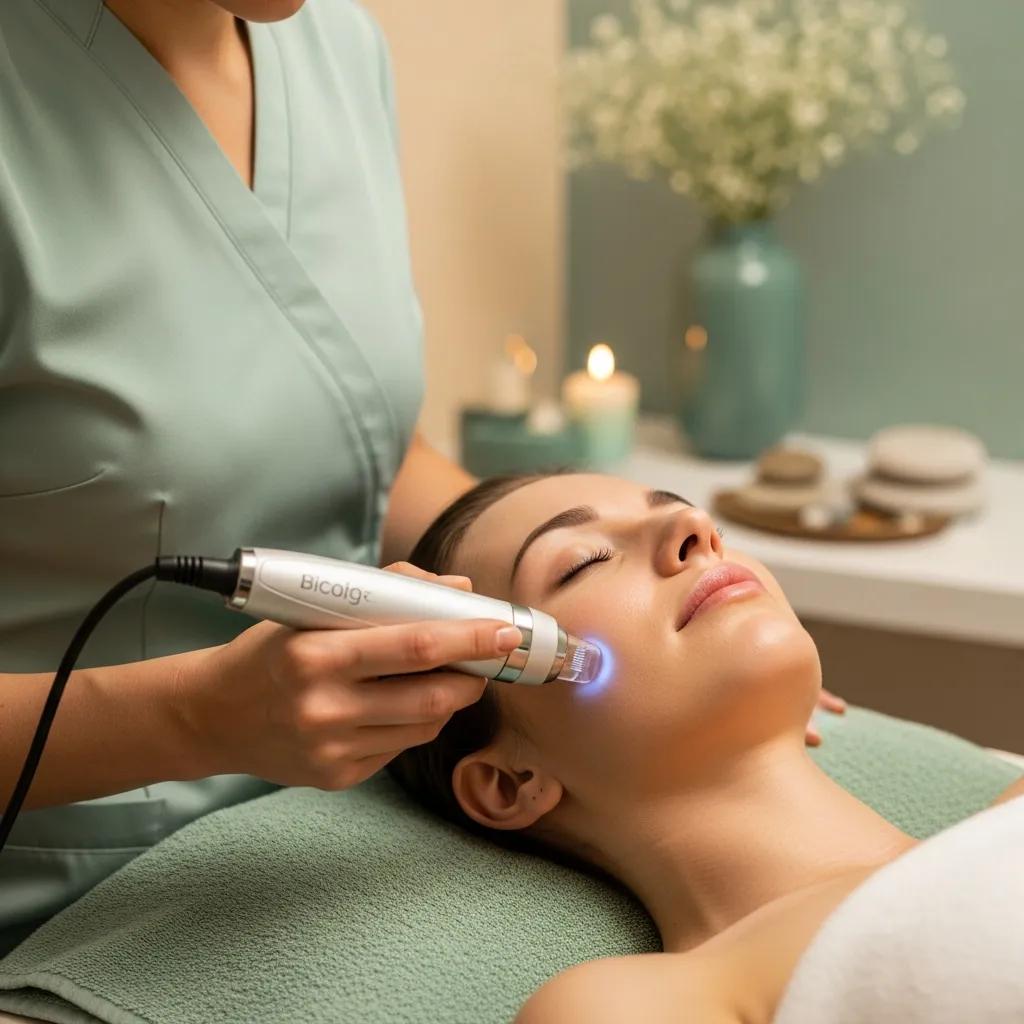
Your skin is cleansed thoroughly and prepped for even energy delivery. A topical numbing cream is applied to ensure comfort throughout the session. Once the skin is ready, the Vybe handpiece is moved across the treatment area with deliberate, methodical precision.
During the session, you may feel warmth and gentle pressure. The sensation varies depending on the area being treated and the depth of energy delivery. Most clients find the experience entirely manageable.
Afterward, the skin typically appears flushed and warm. This response is expected and temporary. Most clients experience mild redness lasting one to two days, with some experiencing light swelling that resolves quickly.
Makeup is generally avoided for the first 24 hours. Your skincare routine will be temporarily adjusted to support healing, protect the barrier, and optimize conditions for collagen production beneath the surface.
Post-treatment care is not an afterthought. The products you use, the way you cleanse, and how you protect your skin from sun exposure in the days that follow all influence the quality of the collagen your body produces. Your provider will walk you through exactly what to do and what to avoid so the remodeling process has every advantage.
| Recovery at a glance Day 1: Redness and warmth similar to a mild sunburn. No makeup recommended. Days 2–3: Redness fades. Skin may feel slightly tight or dry as it heals. Days 4–7: Most visible signs of treatment have resolved. Gentle skincare resumes. Weeks 4–12+: Collagen remodeling continues beneath the surface. Texture improvements become increasingly visible. |
When results begin to show and why patience is part of the process
Collagen remodeling is not an overnight event.
The biological process that RF Microneedling initiates takes weeks to manifest visibly. It continues for months after a single session.
Many clients notice initial improvements in skin smoothness and tone within the first few weeks. But the more significant changes in scar depth, texture uniformity, and overall skin structure develop over several months as new collagen matures and integrates into existing tissue.
True structural improvement requires the body’s own regenerative systems to do the work. Rushed or excessive stimulation produces inflammation, not resilience. The goal is to create optimal conditions for the skin to rebuild at a pace that produces organized, lasting results.
Most clients see the greatest cumulative benefit from a series of treatments spaced several weeks apart. Your provider will adjust the plan based on how your skin responds.
Precision always outweighs excess.
It is worth noting that the pace of improvement varies by scar type. Shallow rolling scars often respond more quickly. Deeper icepick and boxcar scars require more sessions and more time for the remodeling process to reach its full potential. Understanding this timeline upfront sets realistic expectations and builds trust in the process.
How RF Microneedling integrates with other treatments for enhanced acne scar results
Acne scarring rarely responds to a single modality in isolation.
The most meaningful outcomes come from a thoughtfully sequenced combination of treatments that address different aspects of the scarring at different stages. Vybe RF Microneedling pairs well with several other skin health treatments when timed correctly.
Barrier strengthening protocols prepare the skin to heal more efficiently after RF sessions. Chemical peels can refine surface texture between RF sessions once the skin has recovered. HydraFacial treatments support hydration and clarity during recovery windows.
For clients with post-inflammatory pigmentation alongside scarring, IPL therapy can address tone concerns while RF Microneedling works on texture.
Treatments should complement one another, not compete. And the timing between modalities should respect the skin’s healing cycles rather than push beyond what is productive.
Who benefits most from RF Microneedling for acne scars and when to begin
RF Microneedling for acne scarring is best suited for individuals whose active breakouts have resolved and whose skin is stable enough to tolerate controlled stimulation.
The treatment is effective across a wide range of skin types when performed by an experienced provider who understands how to adjust parameters accordingly. Clinical evidence supports its safety profile for Fitzpatrick skin types III through V, with studies consistently reporting low rates of post-inflammatory hyperpigmentation and shorter recovery times compared to ablative laser alternatives.
This makes it a strong option for clients who want meaningful improvement without the extended downtime or elevated pigmentation risk associated with more aggressive resurfacing technologies.
For those with a history of active acne that has recently stabilized, timing is especially important. Beginning treatment too soon after active breakouts can compromise healing. A thoughtful waiting period, supported by proper skincare, ensures the skin is positioned to respond at its best.
The best time to begin is when your skin is ready. Not when a trend suggests it.
When preparation comes before treatment and why that protects your results
There are moments when RF Microneedling is not the immediate next step.
If the skin barrier is compromised, if active inflammation is present, or if there are underlying conditions affecting healing, we prioritize stabilization first.
Strengthening the skin before stimulation is not a delay. It is a strategic decision that protects the quality of your outcome. A compromised barrier cannot heal efficiently. The collagen remodeling process may be slower, less organized, or incomplete. Investing in skin preparation ensures that when RF Microneedling is introduced, your skin responds at its best.
This is how progress remains steady rather than reactive.
This is how results compound rather than plateau.
Frequently asked questions about RF Microneedling for acne scars
How many sessions are typically needed for acne scarring?
Most clients benefit from a series of three to four treatments spaced several weeks apart. The exact number depends on the type and severity of scarring, your skin’s healing response, and your overall goals. Your plan is adjusted as results develop.
Will RF Microneedling completely remove my acne scars?
RF Microneedling significantly improves the appearance of acne scars, but complete elimination is not a realistic expectation for most scar types. The goal is meaningful, progressive improvement in depth, texture, and overall skin uniformity. For many clients, the results are quietly transformative.
Is the treatment safe for darker skin tones?
Yes. Unlike ablative laser treatments that carry a higher risk of post-inflammatory hyperpigmentation in darker skin, RF Microneedling is chromophore-independent. It delivers energy through radiofrequency heat rather than targeting specific pigments, making it a safer and more inclusive option across skin types.
Can I combine RF Microneedling with other acne scar treatments?
Absolutely. RF Microneedling is often most effective as part of a multi-modality approach. Your provider will recommend complementary treatments based on your scar type, skin condition, and healing timeline.
When will I see visible improvement in my acne scars?
Initial smoothing and texture refinement may be noticeable within a few weeks. Deeper structural changes develop over several months as new collagen matures beneath the surface. Results continue to improve with each session in a series.
Your skin has already done the hard part of healing once before
Acne scarring is a record of resilience. Your skin fought through inflammation, repaired itself under difficult conditions, and carried on. What remained was simply the best your body could do without guidance.
Now, with the right technology and the right strategy, your skin has the opportunity to remodel on its own terms. Not to erase its history. But to refine it. To build new structure where it was lost. To feel smooth, strong, and stable again.
That is the kind of change that shows up quietly. In the way your skin catches light differently. In the way your fingers register a surface that no longer tells the old story. In the confidence that comes from knowing your skin is finally moving forward instead of standing still.
At The Skin Society, that process begins with understanding your skin fully. Book your [First Name] Experience to design a plan built around your skin, your scars, and your goals.
Or if you are ready to begin, reserve your Vybe RF Microneedling session here.
Coveted care. Quiet confidence. Results that speak for themselves.
You are in the right place.







are you THE inside
on
Skin health should feel like you, not a chore.
your skins invite
Get the inside track on skin that makes sense. Join us for exclusive notes from the suite—expert insights, smart strategy, and everything your skin actually needs.
